
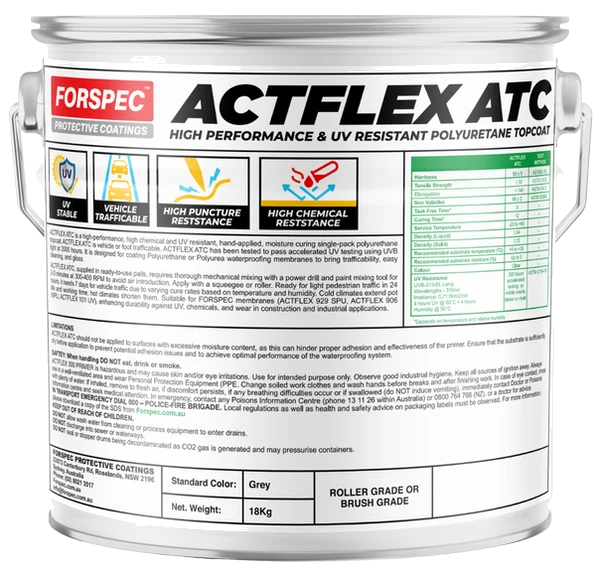
ACTFLEX ATC UV topcoat
UV-stable aliphatic polyurethane topcoat for exposed trafficable membranes
UV-stable topcoat that takes foot and vehicle traffic over cured polyurethane membranes.
ACTFLEX ATC coverage, coats and cure times
Single-pack aliphatic polyurethane topcoat in clear or grey. It goes over cured FORSPEC polyurethane and polyurea membranes on balconies, podiums, rooftops and parking decks.
- Coverage
- 6–8 m²/Lper coat · TDS p2
- 4 L pack
- ≈ 12–16 m²typicalin two coats, at 6–8 m²/L · TDS p3
- Coats
- 2where full film build and durability are needed · TDS p2
- Between coats
- 4–6 hbefore the second coat · TDS p2
- Tack-free
- 3 htypicalat 25°C and 50% RH · TDS p2
- Cure
- 12 htypicalat 25°C and 50% RH · TDS p2
- Traffic
- After curetypicalfoot and vehicle traffic, after full cure · TDS p4
- Recoat later
- 12–36 hmaintenance recoat; abrade after 36 hours · TDS p2
- Substrate
- 5–35°Ctemperature; moisture 5% maximum · TDS p2
From the FORSPEC data sheet, TDS-ATC · Revision 1 · 25 August 2026. Times are at 25°C and 50% relative humidity unless the data sheet says otherwise. Typical = FORSPEC’s own typical value, not a laboratory-certified one.
Where ACTFLEX ATC is used
Use it for
- UV topcoat over cured FORSPEC polyurethane and polyurea membranes
- Exposed balconies, terraces and podium decks
- Rooftops and exposed horizontal surfaces
- Car parking decks and vehicle-trafficked membrane areas
- Plant rooms, service areas and exposed plinths
- Refreshing existing FORSPEC polyurethane topcoat systems
Know before you start
- Not a waterproofing membrane: it protects a membrane, it does not waterproof
- Only over cured FORSPEC polyurethane and polyurea membranes
- Not for immersion without written FORSPEC approval
- Not a filler: fix pinholes and surface defects before topcoating
Its FORSPEC systems
How to apply ACTFLEX ATC
- 01
Prepare
Confirm the membrane is fully cured per its TDS. Rectify pinholes and damage, vacuum off dust and debris, and check substrate moisture is 5% or less.
- 02
Check
Membrane left exposed more than 24 hours needs thorough cleaning by a method approved by a FORSPEC representative. Substrate and air 5–35°C, no rain before tack-free.
- 03
Mix
Single pack, no mixing ratio. Stir thoroughly and gently without whipping in air. Do not dilute unless a FORSPEC representative instructs it in writing.
- 04
Apply
Roller, brush or airless spray at 6–8 m² per litre, to a continuous film with no holidays or pooling. Allow 4 to 6 hours, then apply the second coat at the same rate.
- 05
Cure
Protect from rain, standing water and traffic until cured, about 12 hours. Inspect for holidays, pinholes and uneven gloss before releasing the area.
- 06
Recoat
A later maintenance recoat goes on after 12 hours and before 36 hours. Beyond 36 hours, abrade and clean the surface first.
A short guide from the data sheet. Read the full ACTFLEX ATC TDS before you start.
Drawings for the systems it goes in
FORSPEC standard details as PDF and DXF. Each sheet is a generic detail: the specification names the products.
ACTFLEX ATC test reports and compliance
- ASTM G154-16 UV exposure
- 2,000 hours UVB, no visible cracking, blistering or chalkingAccredited data, report number to be cited at next revision
Download the reports
Results as stated in the data sheet, TDS-ATC · Revision 1 · 25 August 2026. Warranty up to 25 years, depending on the system: ask FORSPEC which term applies to your system.
ACTFLEX ATC questions
Can I drive on ACTFLEX ATC?
Yes, after full cure. The cured film takes foot and vehicle traffic and resists oils, cleaning agents and harsh chemicals.
What can I put ATC over?
Only cured FORSPEC polyurethane and polyurea membranes. Confirm compatibility with a FORSPEC representative before using it over any other system.
How much do I need?
6 to 8 m² per litre per coat. A 4 L pack covers about 24 to 32 m² in one coat and 12 to 16 m² in two coats. Rough or textured surfaces use more.
How long between coats?
Allow 4 to 6 hours before the second coat. A later maintenance recoat goes on after 12 hours and before 36 hours.
Does ATC waterproof on its own?
No. It is not a waterproofing membrane. It protects a membrane from UV, traffic and chemicals.
Is it UV tested?
Yes, 2,000 hours of accelerated UVB exposure to ASTM G154-16 with no visible cracking, blistering or chalking. The report number is to be cited at the next revision.
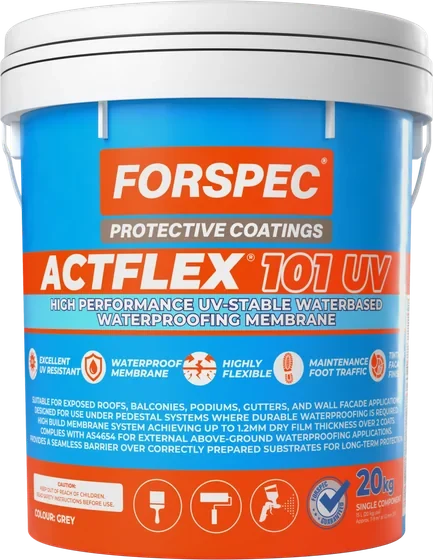
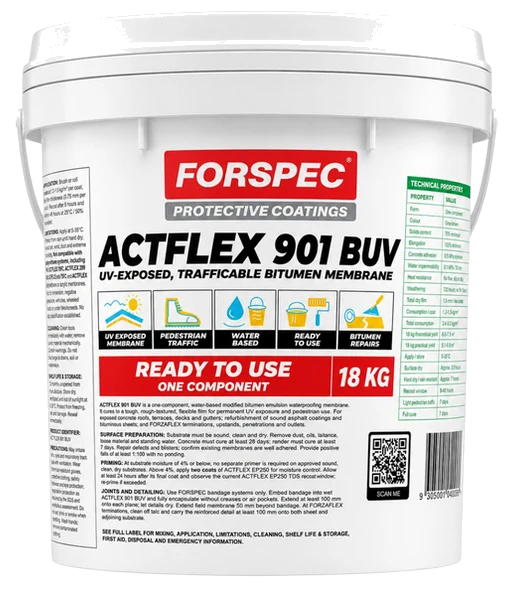
Used with ACTFLEX ATC
ACTFLEX ATC TDS and SDS
Always work from the current data sheet. Every FORSPEC TDS and SDS →
Specify it. Or buy it.
Send the drawings or photos and FORSPEC comes back with the system, the details and the quantities. Or find a FORSPEC stockist for ACTFLEX ATC.