
Moisture in concrete. How dry is dry enough?
·2 min read·FORSPEC Technical Team
The short version
- The standards say measure the slab before the membrane goes on. The limit is the one on the membrane's data sheet.
- Where the maker gives no limit, AS 3740's guide is 80% relative humidity or less by an in-slab probe.
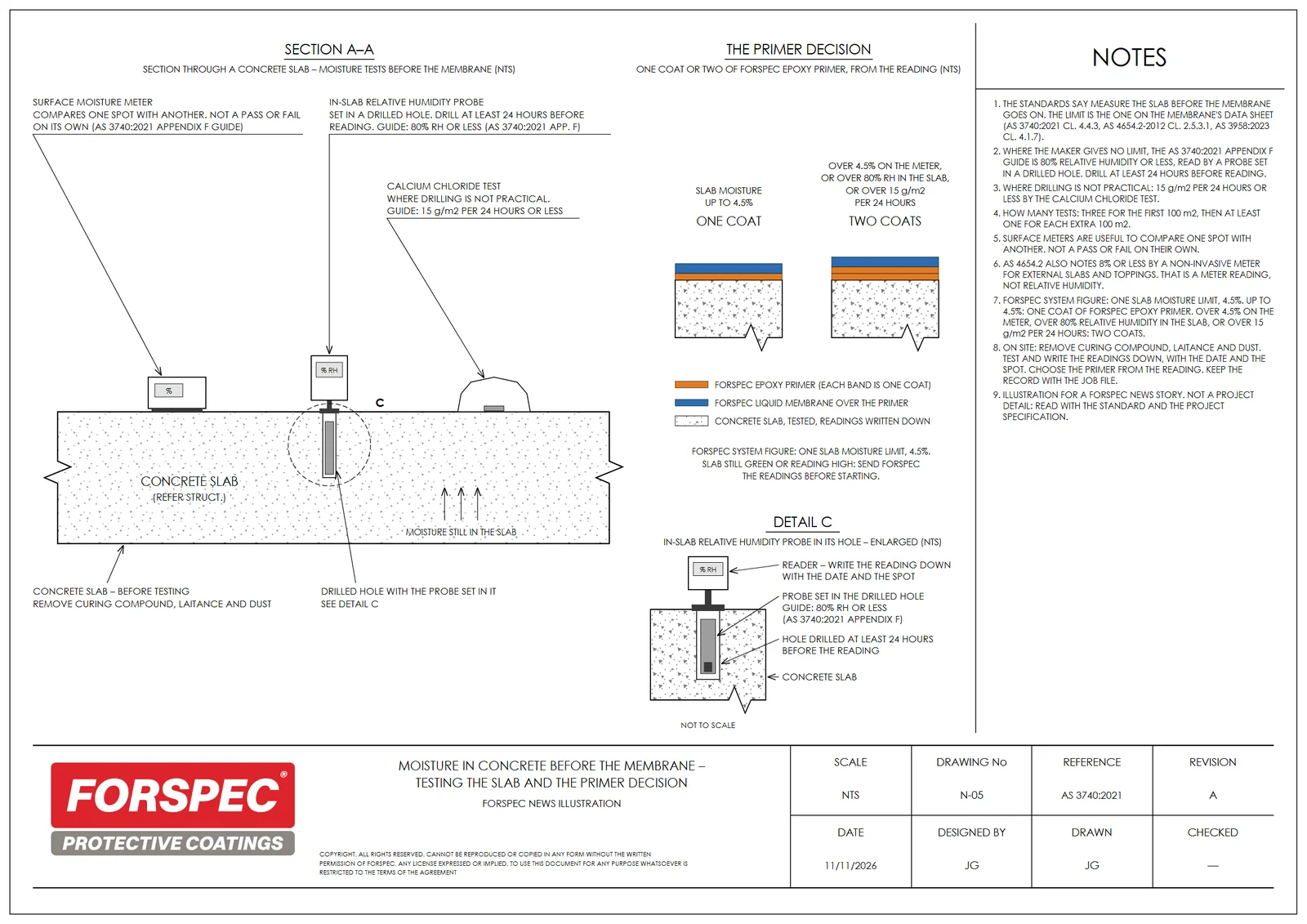
- The FORSPEC limit is 4.5% slab moisture. Up to 4.5%, one coat of ACTFLEX EP250 primer. Over 4.5%, two coats.
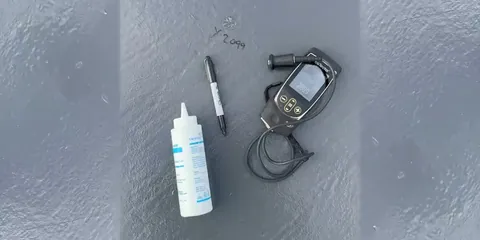
Most membrane failures on new concrete start before the first coat. The slab looked dry, the membrane went on, and the moisture still in the concrete pushed it off as blisters and pinholes.
What the standards ask for
- Internal wet areas (AS 3740)
- Measure the moisture before the membrane. It must suit that membrane.
- Balconies and roofs (AS 4654.2)
- Substrate dry, clean and smooth, with a moisture content that suits the membrane.
- Tiling (AS 3958)
- Test where moisture could harm the system. The pass mark is each maker's limit.
None of the three sets a single pass mark of its own. Each one points to the data sheet for the product you are using.
The guide figures, where the maker gives none
- In-slab relative humidity: 80% or less, read by a probe set in a drilled hole. Drill at least 24 hours before reading.
- Moisture vapour emission: 15 g/m² per 24 hours or less by the calcium chloride test, where drilling is not practical.
- How many tests: three for the first 100 m², then at least one for each extra 100 m².
- Surface meters: useful to compare one spot with another. Not a pass or fail on their own.
AS 4654.2 also notes 8% or less by a non-invasive meter for external slabs and toppings. That is a meter reading, not relative humidity, so the two figures cannot be swapped.
How long to wait
The tiling standard gives guide drying times for new concrete floors after curing: about six weeks before a bonded screed, and about four weeks before a standard tile adhesive. A site-mixed screed is cured for seven days and then left to air-dry.
Weather, slab thickness and ventilation move all of these, which is why the standards ask for a test, not a date on the calendar.
On site, in order
- Remove curing compound, laitance and dust.
- Test and write the readings down, with the date and the spot.
- Choose the primer from the reading.
- Keep the record with the job file. It is the first thing asked for if a membrane blisters.
The drawing
Where this comes from
- AS 3740:2021: 4.4.3, Appendix F
- AS 4654.2-2012: 2.5.3.1
- AS 3958:2023: 4.1.7, Figure 4.3.1.2
- FORSPEC system figure: 4.5% slab moisture, one coat of ACTFLEX EP250 up to 4.5%, two coats above (confirmed by James, 11 Nov 2026)
- ACTFLEX EP250 Technical Data Sheet
Standards are summarised in FORSPEC's own words as a guide. Read the standard itself and your project documents before you build.
Systems, products and drawings
Got a job this applies to?
Send the drawings or a few photos. FORSPEC comes back with the system, the details and the products for your job, within 6 business hours.
On site with FORSPEC
@forspec.pc on Instagram →


 ▶ 3.2K
More news
All news →The month in waterproofing. In one email.
Code and standards changes, new products, new test reports and jobs from site. Once a month. No sales emails.