
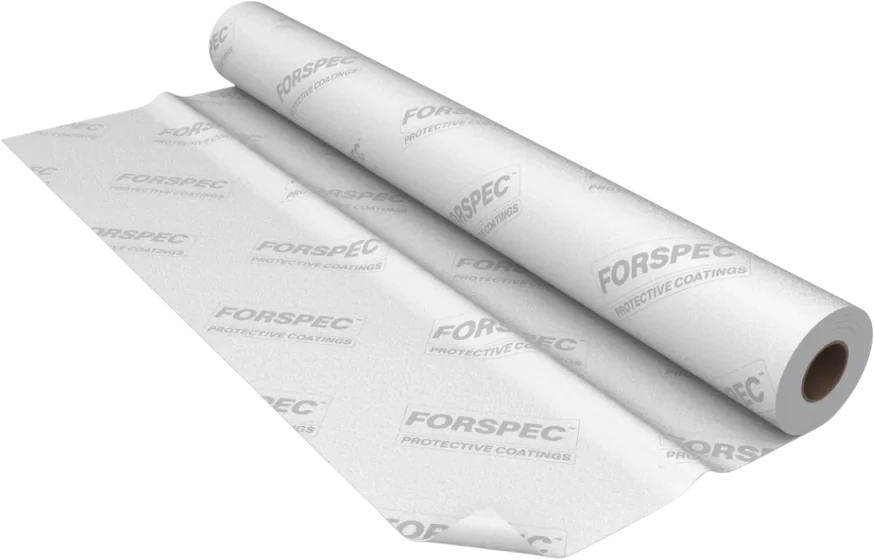
ACTFLEX 1300R Butyl sheet membrane
Dual-fabric butyl rubber sheet waterproofing membrane, adhesive applied, heat-welded laps
Butyl sheet for exposed and heavily loaded areas. Tile or screed from 1 hour after installation.
ACTFLEX 1300R coverage, coats and cure times
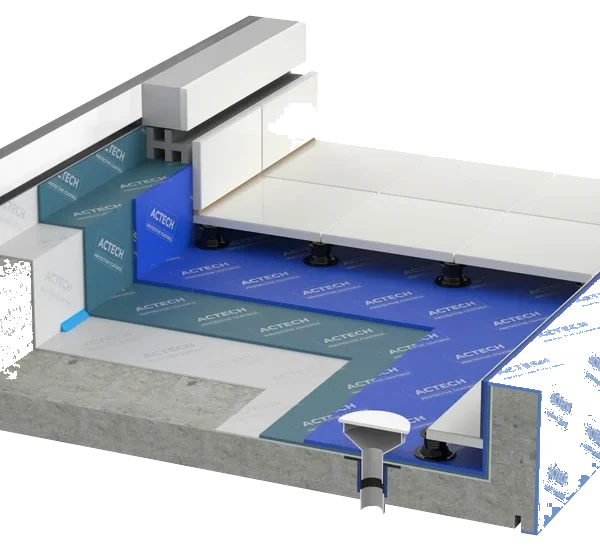
Dual-fabric butyl rubber sheet for trafficable podiums, roof decks, balconies, terraces and below-ground walls. It is bonded with ACTFLEX 301 ADHESIVE and its laps are hot-air welded.
- Gauge
- 1.3 mmtotal, white nonwoven fabric on both faces · TDS p3
- Roll size
- 1.4 m x 20 m28 m² gross, approx. 34 kg per roll · TDS p3
- Coverage
- ≈ 25–26 m²practical per roll; 27.2 m² effective after side laps · TDS p10
- Laps
- 40 mm minside and end laps, hot-air welded · TDS p6
- Cover from
- 1 hourtile, screed or flood test, after installation · TDS p4
- Flood test
- 24 hours50 mm minimum depth at the highest point · TDS p11
- Apply at
- 5–35°Cambient (average) · TDS p4
- Adhesive
- 4–7 m²/LACTFLEX 301 ADHESIVE, per coated face · TDS p4
- Elongation
- > 380%typicalat break, typical value · TDS p3
From the FORSPEC data sheet, TDS-1300R · Revision 2 · 2 October 2026. Times are at 25°C and 50% relative humidity unless the data sheet says otherwise. Typical = FORSPEC’s own typical value, not a laboratory-certified one.
ACTFLEX 1300R on site
More FORSPEC jobs
Where ACTFLEX 1300R is used
Use it for
- Podiums, roof decks, balconies and terraces under approved finishes
- Below-ground walls and basements, positive side
- Planter boxes and landscaped areas under protection layers
- Under tiles, screeds, pavers and timber decking
- Cavity flashings and damp-proof courses in masonry
- Hybrid details with ACTFLEX 906 WPU, 989 CWP or 101 UV
Know before you start
- Internal wet areas only with written FORSPEC approval: 900R is the standard
- Not a wearing surface: always cover with tiles, screed, decking, pavers or a finish
- Not below 5°C or above 35°C ambient
- Not certified to AS/NZS 4020: no drinking-water contact without written approval
Its FORSPEC systems
How to apply ACTFLEX 1300R
- 01
Prepare
Substrate sound, clean, dry and vacuumed. New concrete cured 28 days. Repair defects of 2 to 30 mm with FORBUILD 100 or FORCRETE 100. Remove sharp protrusions.
- 02
Prime if needed
Moisture above 80% RH or 15 g/m²/24 h: two coats of ACTFLEX EP250, fully cured before adhesive. On sound, dry substrates no primer is needed.
- 03
Detail first
Treat movement joints and corner junctions with ACTFLEX FLEXIPLUG. Form corners and penetrations from cut strips of the sheet (200–300 mm wide) or ACTFLEX SA TAPE.
- 04
Bond
ACTFLEX 301 ADHESIVE on both faces at 4–7 m²/L per face. Let both go tacky, bed the sheet from one edge to expel air, then roll firmly.
- 05
Weld and probe
Hot-air weld every lap after a daily trial weld. Keep laps free of adhesive. Probe every seam along its full length once cool.
- 06
Test and cover
Flood test from 1 hour after installation: 50 mm deep for 24 hours. Tile, screed or cover only after the test passes.
A short guide from the data sheet. Read the full ACTFLEX 1300R TDS before you start.
Where it has been used
FORSPEC projects built with ACTFLEX 1300R.
Drawings for the systems it goes in
FORSPEC standard details as PDF and DXF. Each sheet is a generic detail: the specification names the products.
ACTFLEX 1300R test reports and compliance
- AS/NZS 4858:2004
- Designed and manufactured to complyManufacturer classification
- AS 4654.1-2012
- Designed and manufactured to complyManufacturer classification
- AS/NZS 2904:1995
- Designed to comply as cavity flashing or DPCManufacturer classification
- AS/NZS 4020
- Not certifiedWritten FORSPEC confirmation needed
- VOC content
- Not applicable, factory-made sheet301 ADHESIVE is solvent-based
Results as stated in the data sheet, TDS-1300R · Revision 2 · 2 October 2026. Warranty up to 25 years, depending on the system: ask FORSPEC which term applies to your system.
ACTFLEX 1300R questions
How much ACTFLEX 1300R do I need?
A roll is 1.4 m x 20 m, 28 m² gross. Practical coverage is about 25–26 m² per roll after end laps, upturns, details and wastage. Allow at least 10% over the effective area on a simple rectangular floor.
When can I tile or screed over it?
From 1 hour after installation, once the laps are welded and probed. Tile adhesive and bonded screeds bond to the fabric face with no primer. Flood test first, then cover.
Do I need a primer?
Only where substrate moisture is above 80% RH or 15 g/m²/24 h. Then apply two coats of ACTFLEX EP250 and let it fully cure before the adhesive. Solvents in the adhesive will damage uncured primer.
Is it welded or glued?
Both. The whole sheet is bonded with ACTFLEX 301 ADHESIVE and the laps are hot-air welded with no open flame. Never put adhesive into a lap that will be welded.
Can I use it in a bathroom?
Only with written approval from FORSPEC Technical Services, issued per project. ACTFLEX 900R is the standard internal under-tile membrane.
Can it be left exposed?
No. It is not a wearing surface and must be covered by tiles, screed, decking, pavers or an approved finish. Protect it from sunlight and damage if cover is delayed.
Used with ACTFLEX 1300R
ACTFLEX 1300R TDS and SDS
Always work from the current data sheet. Every FORSPEC TDS and SDS →
Specify it. Or buy it.
Send the drawings or photos and FORSPEC comes back with the system, the details and the quantities. Or find a FORSPEC stockist for ACTFLEX 1300R.