
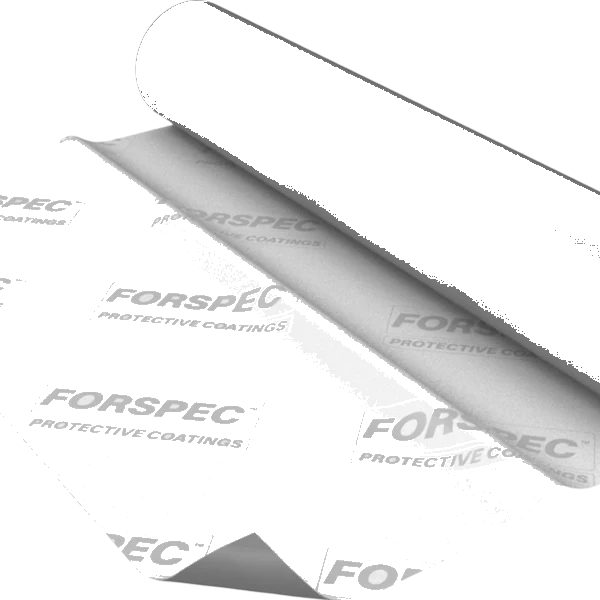
ACTFLEX POLYFIN PVC sheet membrane
Reinforced PVC sheet membrane, mechanically fastened, hot-air welded, UV exposed
Class II PVC sheet you can leave exposed. Certified for pedestrian and occasional service vehicle traffic.
ACTFLEX POLYFIN coverage, coats and cure times
Two-type PVC sheet system: Type P reinforced field sheet and Type H non-reinforced detailing sheet, welded as one. For roofs, podiums, planter boxes, basements, tanks and pools.
- Class
- Class IIType P, AS 4654.1, NATA-accredited Report 608-1 · TDS p2
- Thickness
- 1.5 and 2.0 mmType P; certified on 1.5 mm, applied to both · TDS p3
- Roll size
- 2 m × 20 mType P, 40 m² gross per roll · TDS p8
- Coverage
- 39.0 m²per roll at 50 mm side lap; 38.0 m² at 100 mm · TDS p8
- Minimum fall
- 1% (1:100)draining positively to outlets · TDS p4
- Flood test
- 24 hours50 mm minimum depth, after welding and probing · TDS p8
- UV elongation
- 320%after UV exposure; pass requirement 57% · TDS p5
- Seam strength
- 383.71 N/25 mmfield seam, failure at the lap joint in all specimens · TDS p4
- Low temp
- −25°Ctypicalflexibility, no cracking · TDS p4
From the FORSPEC data sheet, TDS-POLYFIN · Revision 1 · 25 August 2026. Times are at 25°C and 50% relative humidity unless the data sheet says otherwise. Typical = FORSPEC’s own typical value, not a laboratory-certified one.
Where ACTFLEX POLYFIN is used
Use it for
- Flat roofs, including fully exposed roofing systems
- Podiums, structural decks and commercial balconies
- Planter boxes, green roofs and landscaped decks
- Basements and below-grade retaining structures
- Tunnels, rail corridors and civil infrastructure
- Water tanks, reservoirs, swimming pools and water features
Know before you start
- Keep off bitumen, polystyrene and solvent-based products: use a separation layer
- Not for regular vehicle traffic: pedestrian and occasional service vehicles only
- Not for substrates that cannot develop the fastener pull-out capacity
- Not over free water, ponded water, or green or uncured concrete
How to apply ACTFLEX POLYFIN
- 01
Prepare
Fully cured, sound substrate with a 1% (1:100) minimum fall. Remove fins and sharp protrusions. Concrete surface profile 2–4 (ICRI). No free water.
- 02
Lay out
Dry-lay and relax the rolls, running with the fall. Stagger end laps. Fit a separation layer where bitumen or polystyrene is present.
- 03
Fix
Fasten the perimeter, edges and penetrations with FORSPEC Mechanical Fixing Bars or approved plate assemblies, to the engineer's wind uplift design. Overweld with PVC cover strip.
- 04
Weld
Trial weld each day. Hot-air weld all side and end laps, then probe every seam along its full length once cool.
- 05
Detail
Form walls, upstands, corners and penetrations in Type H, welded to Type P. Terminate upstands to a PVC-coated termination strip, mechanically fixed.
- 06
Test
Flood test 50 mm deep for 24 hours, or hose test each detail for at least 30 minutes where it cannot be flooded. Then protect, ballast or leave exposed.
A short guide from the data sheet. Read the full ACTFLEX POLYFIN TDS before you start.
ACTFLEX POLYFIN test reports and compliance
- AS 4654.1-2012
- Class II, all durability criteria passReport No. 608-1, NATA, ISO/IEC 17025
- AS 1580.403.2
- 0.016 mm abrasion, meets non-trafficable limitReport No. 608-1
- AS 1580.403.2
- 0.077 mm, pedestrian and occasional vehicle trafficReport No. 608-1
- ASTM D6207
- No changes over two full cyclesReport No. 608-1
- BS EN 12691
- 1000 mm drop height without leakageReport No. 608-1
- AS/NZS 4020
- No certification heldWritten FORSPEC confirmation needed
Download the reports
Results as stated in the data sheet, TDS-POLYFIN · Revision 1 · 25 August 2026. Warranty up to 25 years, depending on the system: ask FORSPEC which term applies to your system.
ACTFLEX POLYFIN questions
How much ACTFLEX POLYFIN do I need?
A Type P roll is 2 m × 20 m, 40 m² gross. Effective area is 39.0 m² at a 50 mm side lap or 38.0 m² at 100 mm. Allow at least 10% extra for end laps, upturns and cutting waste.
Can it be left exposed?
Yes. It is UV stable and can be the finished exposed surface with no topcoat or ballast. Provide walkway protection on access and plant routes: it is not a wearing surface.
Is it glued to the slab?
No. The field sheet is mechanically fastened and semi-loose laid, so it does not depend on adhesion to the substrate. Only vertical transitions use FORSPEC PVC Contact Adhesive or Primer, on a dry surface.
What are Type P and Type H?
Type P is the scrim-reinforced field sheet. Type H is the non-reinforced sheet for walls, upstands, corners and penetrations. Type H welds to Type P as the same PVC.
Can it go over bitumen or polystyrene?
Not directly. It is not compatible with bitumen, polystyrene insulation or solvent-based products in contact. A separation layer is mandatory.
Can vehicles drive on it?
Only pedestrian and occasional service vehicle traffic is certified. Regular vehicle traffic is not approved: provide a separate trafficable wearing surface.
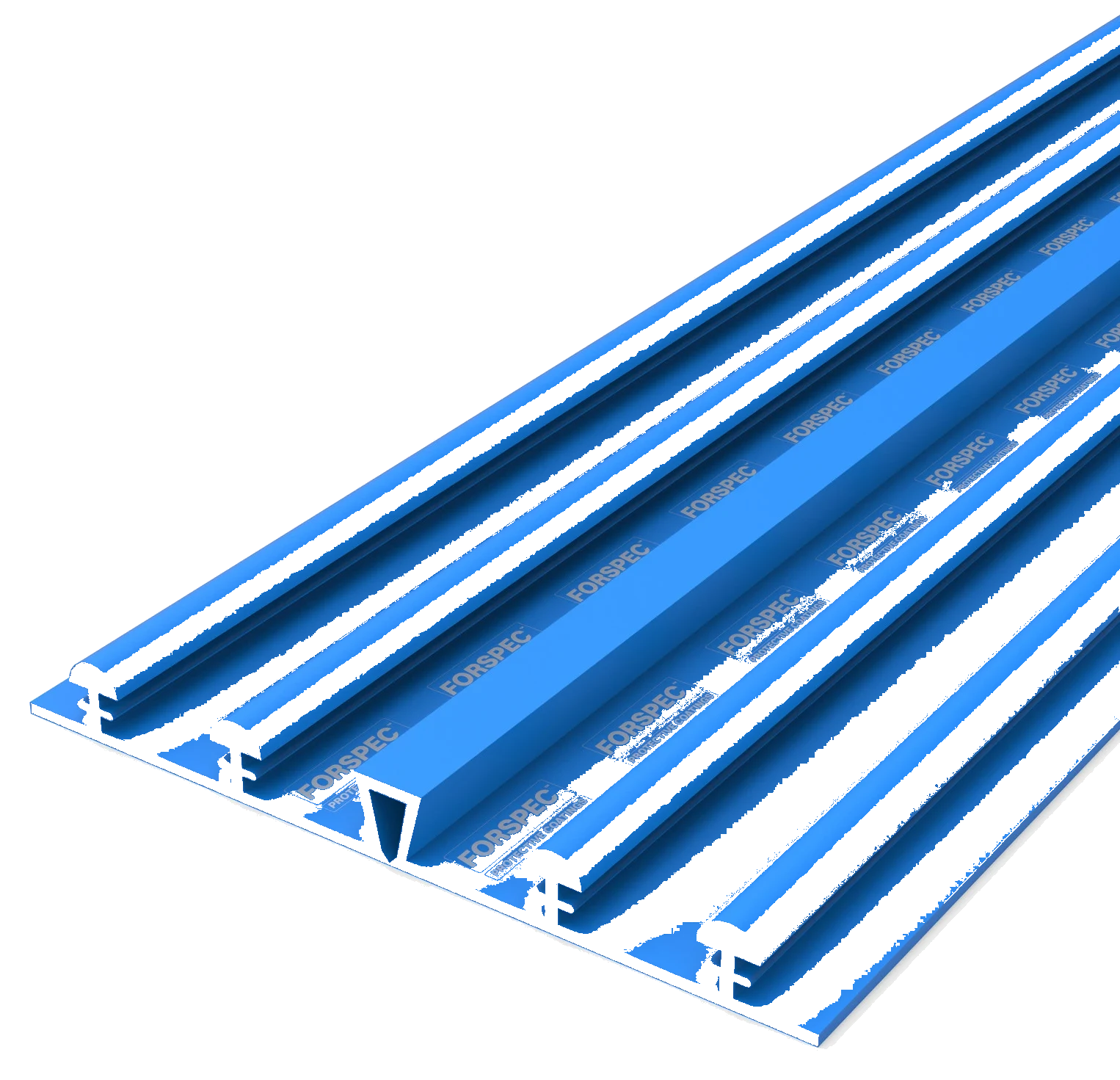
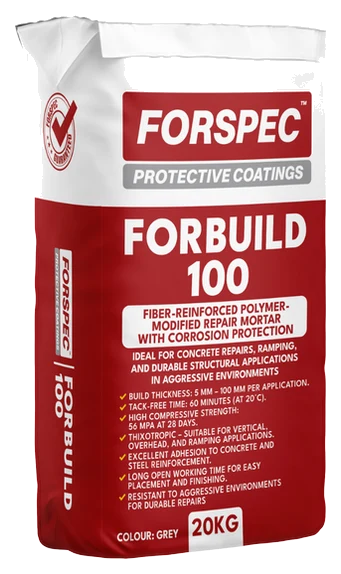
Used with ACTFLEX POLYFIN
ACTFLEX POLYFIN TDS and SDS
Show all 5 documents ↓
Always work from the current data sheet. Every FORSPEC TDS and SDS →
Specify it. Or buy it.
Send the drawings or photos and FORSPEC comes back with the system, the details and the quantities. Or find a FORSPEC stockist for ACTFLEX POLYFIN.