
Bathroom door waterstop. A tile trim is not one.
·1 min read·FORSPEC Technical Team
The short version
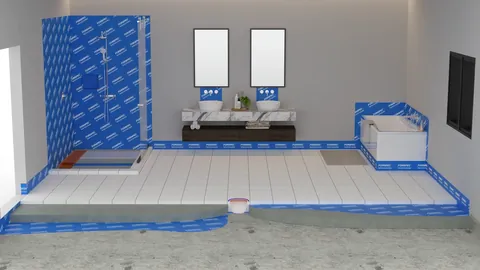
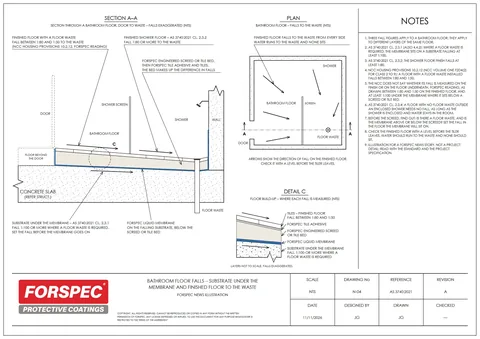
- The wet-area standard asks for a waterstop across the doorway, with its upright leg finishing flush with the finished floor.
- The membrane is sealed to it. That is what stops water tracking under the door frame.
- A tile trim fitted at tiling stage is not a waterstop. Regulators have reported it as a common finding.
Water on a bathroom floor does not stop at the door. It runs through the tile bed, under the door frame, and into the carpet or timber outside. The waterstop is the dam that turns it back.
What the standard asks for at the door
- A waterstop across the full width of the doorway.
- Its upright leg finishes flush with the top of the finished floor.
- The membrane is taken onto it and sealed to it.
- Around the room, the wall and floor junction is flashed at least 25 mm up the wall and 50 mm onto the floor.
Why a tile trim fails
- When it goes in
- At tiling, after the membrane is finished
- What it is fixed to
- The tile adhesive, not the floor
- Sealed to the membrane?
- No. Water passes underneath it.
In a level-entry shower
The same idea applies under a shower screen with no hob. The waterstop sits under the screen, and there its leg finishes at least 5 mm above the finished floor.
Where this comes from
- AS 3740:2021: 4.9.1, 4.8.4
Standards are summarised in FORSPEC's own words as a guide. Read the standard itself and your project documents before you build.
Systems, products and drawings
Got a job this applies to?
Send the drawings or a few photos. FORSPEC comes back with the system, the details and the products for your job, within 6 business hours.
On site with FORSPEC
@forspec.pc on Instagram →
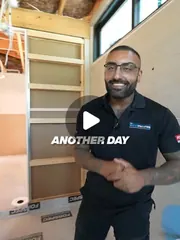
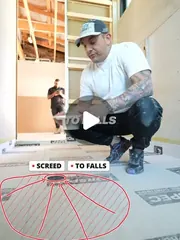 ▶ 3.2K
More news
All news →
The month in waterproofing. In one email.
Code and standards changes, new products, new test reports and jobs from site. Once a month. No sales emails.