
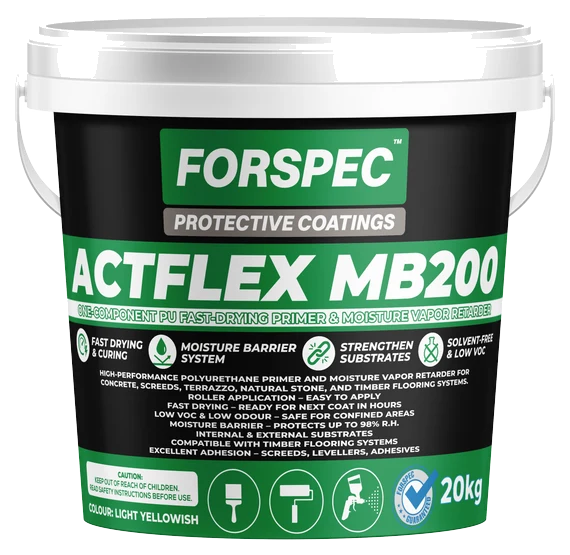
ACTFLEX MB200 Primer and vapour retarder
One-component polyurethane fast-drying primer and moisture vapour retarder
One coat primes. Two crosswise coats retard moisture vapour to 98% substrate RH.
ACTFLEX MB200 coverage, coats and cure times
Certified low-VOC, moisture-curing polyurethane primer for cementitious substrates, indoors and out. One coat is a bonding primer. Two crosswise coats make a moisture vapour retarder under timber and resilient floor coverings.
- Vapour transm.
- 4.34 g/m²/24 hASTM E96, at 0.3 mm DFT, XTecGen 514-1 · TDS p1
- Substrate RH
- Up to 98%ASTM F2170, certified two-coat system · TDS p2
- Coats
- 1 or 21 as primer, 2 crosswise as vapour retarder · TDS p2
- Consumption
- ≈ 250 g/m²per coat, about 0.225 L/m² · TDS p2
- Coverage
- ≈ 4 m²/kgper coat, about 4.4 m²/L · TDS p2
- Recoat
- 1–4 hsecond coat, depends on absorbency · TDS p2
- Foot traffic
- Approx. 4 hat 25°C and 50% RH, same as full cure · TDS p2
- Overcoat
- Within 48 hwithout sand broadcast, else reactivate or re-prime · TDS p3
- Apply at
- +5 to +35°Csubstrate and ambient · TDS p2
From the FORSPEC data sheet, TDS-MB200 · Revision 2 · 12 November 2026. Times are at 25°C and 50% relative humidity unless the data sheet says otherwise.
Where ACTFLEX MB200 is used
Use it for
- Bonding primer for FORSPEC membrane, screed and levelling systems
- Moisture vapour retarder under timber and resilient floor coverings
- Cementitious subfloors with residual damp within the stated limit
- Ceramic, terrazzo and natural stone bases
- Dusty and friable cementitious surfaces, to consolidate them
- Interior and exterior applications
Know before you start
- Not a waterproofing membrane: it does not resist hydrostatic pressure
- Not for liquid water, rising damp or negative hydrostatic pressure
- One coat does not give the vapour rating: two crosswise coats are needed
- Do not dilute. Not below 5°C or above 35°C
How to apply ACTFLEX MB200
- 01
Prepare
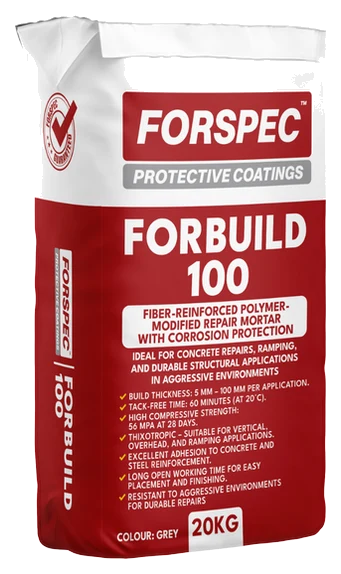
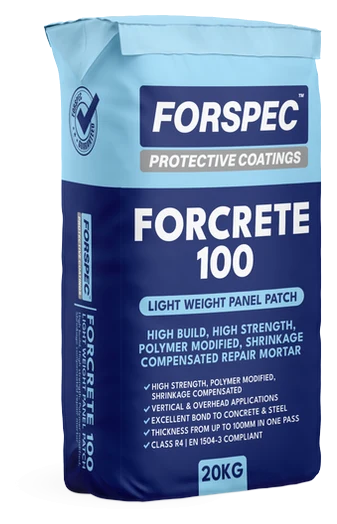
Sound, dry surface free of dust, grease, laitance and weak layers. Grind, shot-blast or sand off loose material and vacuum. Repair cracks and holes with FORBUILD 100 or FORCRETE 100, cured.
- 02
Test
Test substrate relative humidity with an in-situ probe to ASTM F2170 and check the reading against the limit before you start.
- 03
Prime
Stir until uniform and do not dilute. One coat at about 250 g/m² with a fine-pored foam or velour roller, in cross strokes. Avoid puddling.
- 04
Retarder
For vapour control apply two thin coats crosswise. Let the first dry fully before the second. Recoat interval is 1–4 hours, depending on absorbency.
- 05
Sand
Under a levelling compound or screed, broadcast kiln-dried quartz sand (70–140 mesh) at 0.5–1.0 kg/m² into the wet final coat. Remove loose sand once cured.
- 06
Cover
Without sand, apply the next layer within 48 hours, or mechanically reactivate or re-prime. Screeds and direct bonding go on after full cure and within 48 hours.
A short guide from the data sheet. Read the full ACTFLEX MB200 TDS before you start.
ACTFLEX MB200 test reports and compliance
- ASTM E96, desiccant method
- Certified, moisture vapour transmission 4.34 g/m²/24 h at 0.3 mm DFTXTecGen Report 514-1
- Certified test build
- 2 coats at 0.2 mm, 0.3 mm DFTXTecGen Report 514-1
- VOC content
- 93 g/L, under the Green Star limit of 250 g/LCETEC certificate P25100001, tested by FORAY (NATA 1231), issued 16 Oct 2025
Download the reports
Results as stated in the data sheet, TDS-MB200 · Revision 2 · 12 November 2026. Warranty up to 25 years, depending on the system: ask FORSPEC which term applies to your system.
ACTFLEX MB200 questions
Is ACTFLEX MB200 a waterproofing membrane?
No. It retards moisture vapour transmission but does not resist hydrostatic pressure. Do not use it where liquid water, rising damp or negative pressure is present.
How do I use it as a moisture barrier?
Two thin coats applied crosswise, the first fully dry before the second. It is rated to 98% substrate RH by ASTM F2170 in the certified two-coat system. One coat does not give the rating.
How much ACTFLEX MB200 do I need?
About 250 g/m² per coat, or about 4 m² per kg. A 20 kg pack covers about 80 m² in one coat or about 40 m² in the two-coat system.
How soon can I walk on it or overcoat?
Foot traffic is about 4 hours at 25°C and 50% RH. Without sand, apply the next layer within 48 hours. Screeds and direct bonding go on after full cure and within 48 hours.
Do I need to broadcast sand?
Where a levelling compound or screed follows, yes: broadcast kiln-dried quartz sand 70–140 mesh at 0.5–1.0 kg/m² into the wet final coat, then remove loose sand.
Can it go over a damp slab?
Yes, within the stated limit: substrate RH up to 98% by ASTM F2170 in the certified two-coat system. Check the slab with an in-situ probe first.
Used with ACTFLEX MB200
ACTFLEX MB200 TDS and SDS
Always work from the current data sheet. Every FORSPEC TDS and SDS →
Specify it. Or buy it.
Send the drawings or photos and FORSPEC comes back with the system, the details and the quantities. Or find a FORSPEC stockist for ACTFLEX MB200.